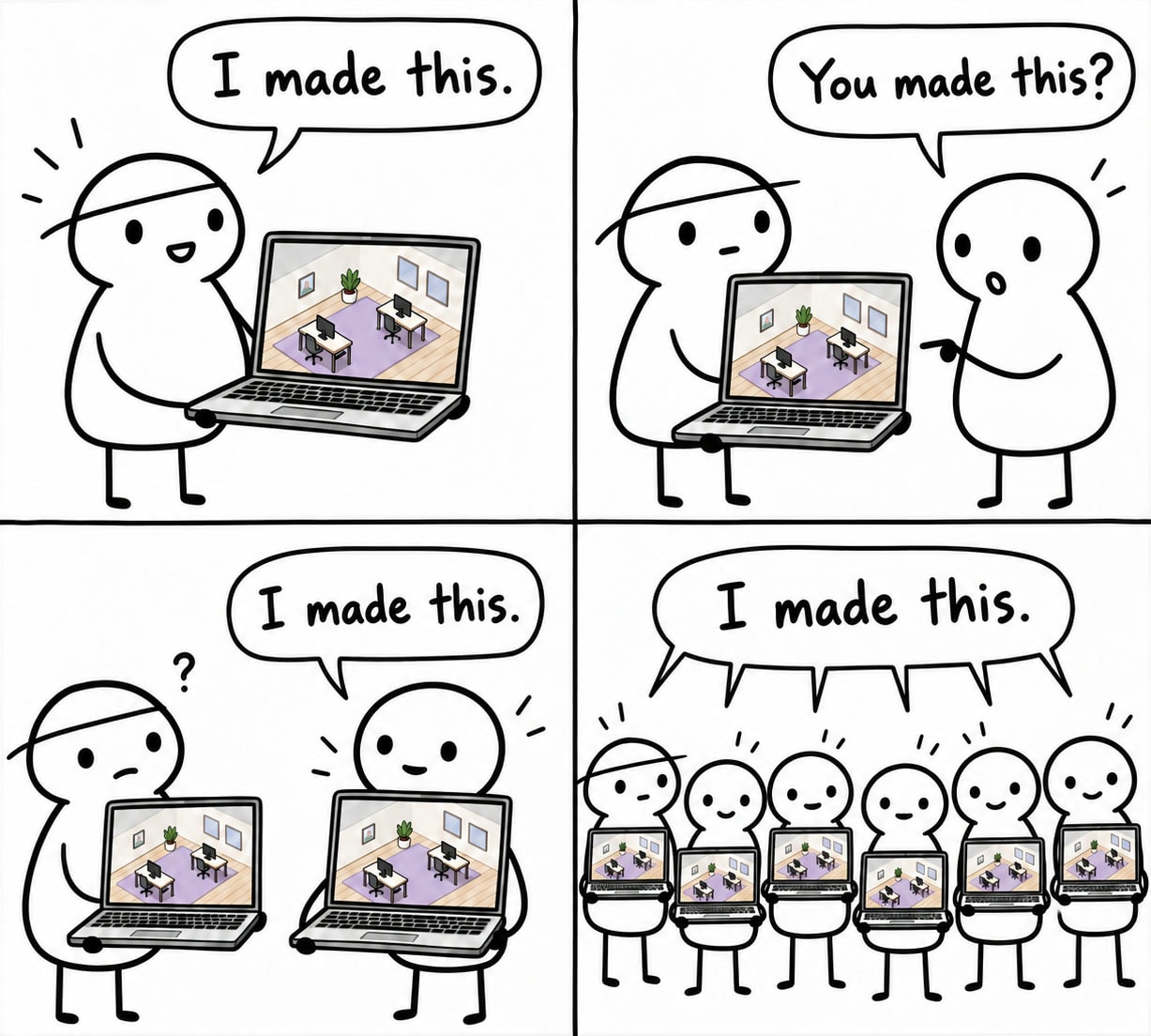

Over the weekend, someone posted the same thing I'd been building for the last couple of days:

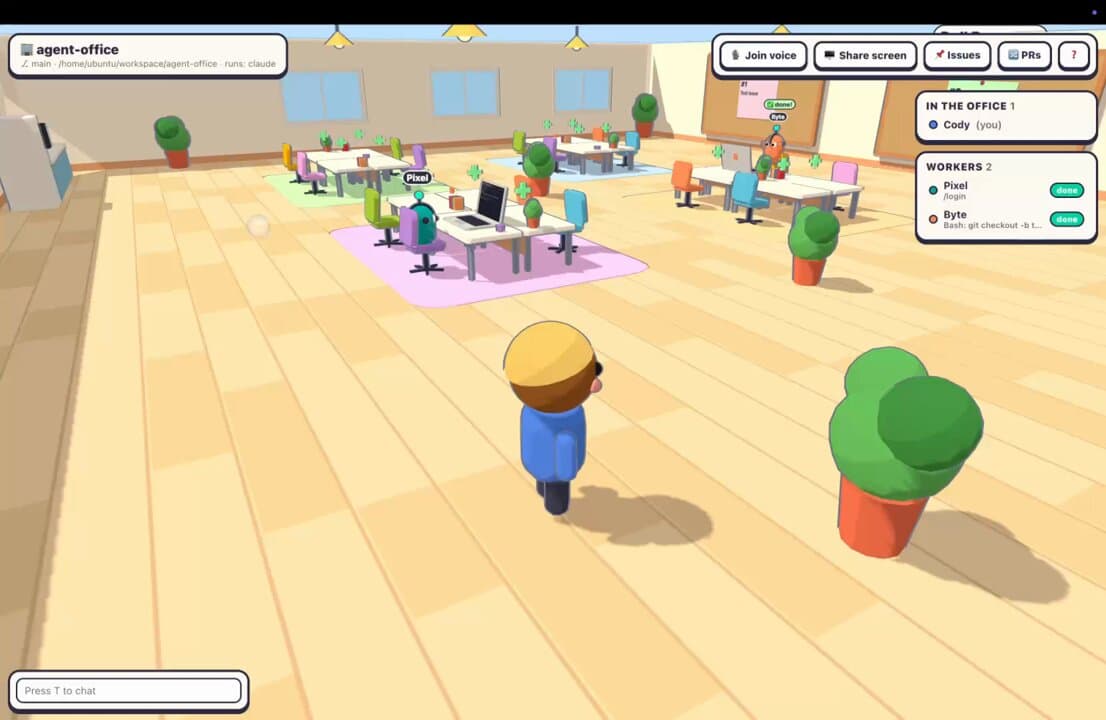
one Opus 5.5 prompt, and now I run around a virtual office managing agents to work on github issues and merge conflicts
- 126
- 172
- 3.7K
- 476.7K
A 3D office where your coding agents run around. More specifically, it has a cartoony style, light wooden floor with colored carpets, decorative plants and dark outlines around the meshes. Exactly like mine. Especially eerie were the outlines and the colored carpets, things I had explicitly asked for (my first one-shot looked super realistic, not cartoony at all).
My first thought was that the copycat game from the beginning of the year was starting again.
Back then, it was "StarCraft for agents": interfaces where you command coding agents like units in a strategy game. I was a prominent part of that wave:

the future of AI orchestration is 3D
our time has come
- 104
- 113
- 2K
- 277.6K
Lots of people hopped on that bandwagon in a short amount of time and made their own variants. Right now the same thing is happening with P(Doom) videos: something appears, and within days there are dozens of versions of it.
What I was building
Ralv is a spatial interface for running coding agents. Ralv3, the version I was working on, leans more into the gamification aspect. It is an office seen from above: every project gets a room, and every agent gets a desk. I hadn't published it yet.
I started it on September 23. About an hour in, I threw out the look the model had picked (more detailed/realistic) and asked for a cartoony style using outlines around the meshes. The next day, I asked for carpets in each project's color, because I wanted them to represent the project zones from earlier versions of Ralv:
Reorganizing traditional companies takes ages,
in Ralv you can do it in seconds
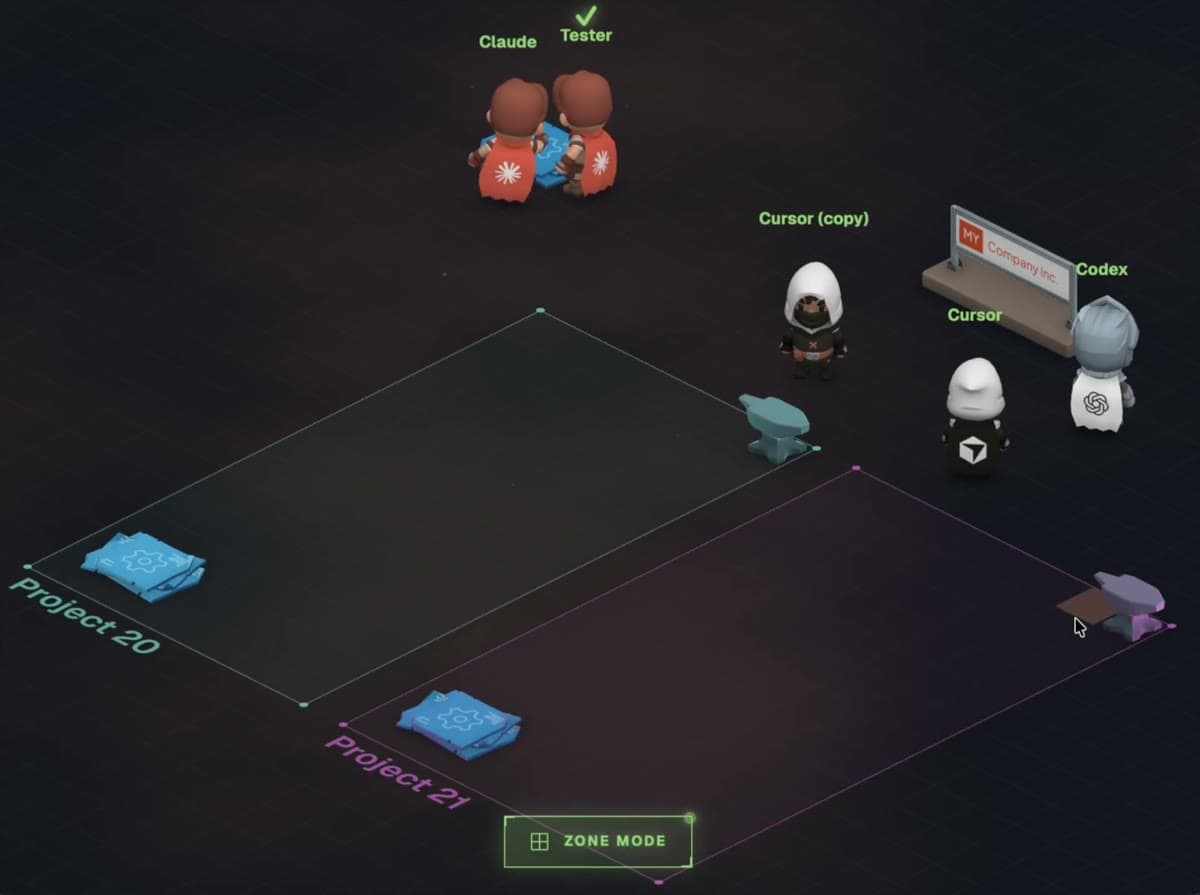
Cursor is back on the menu, boys!
- 51
- 103
- 1.4K
- 298.3K
Two days later, WebDevCody posted his office, with carpets under the desks and the same style I'd been iterating on.
That's what made it feel stolen. Not the office itself, but the details (an office for agents is a fairly obvious idea after all). The carpets and the outlines felt completely unique in my head. I was sure nobody else would end up at that exact combination.
And the worst part was that I couldn't prove any of it. My timestamps live in a private repository, and even if I open-sourced it, they could have been edited.
Something must have happened
Until I sat down to write this post, I was sure that something had happened. I could think of three explanations:
- My data leaked through a model. We build with the same models, and those models learn from how we use them. Maybe my prompts and results ended up in the training data. Or maybe some optimization reuses what worked for one person when the next person asks for something similar.
- I had been hacked. Someone had access to my machine, or my agent was tricked into leaking my private repository somehow.
- I'm really not as creative as I think. Maybe a lot of people are just finding out right now that their ideas aren't actually that unique (ideas are only combinations, and the filters that kept most of them from being built are coming down).
I'd suspected the first one before. In August, shortly after I built a procedural spaceship generator with Codex, a spaceship generated by OpenAI's next model went around on X, with the same bloom, the same colors and the same shading. Back then I joked with a friend that OpenAI had trained on my trajectories, but getting that same feeling again only a month later felt creepy.
Following the trail
So I let my agent investigate WebDevCody's repository. It first found an explicit comment about carpets in the codebase, which the agent flagged as surprisingly similar to my prompt from a few days earlier.
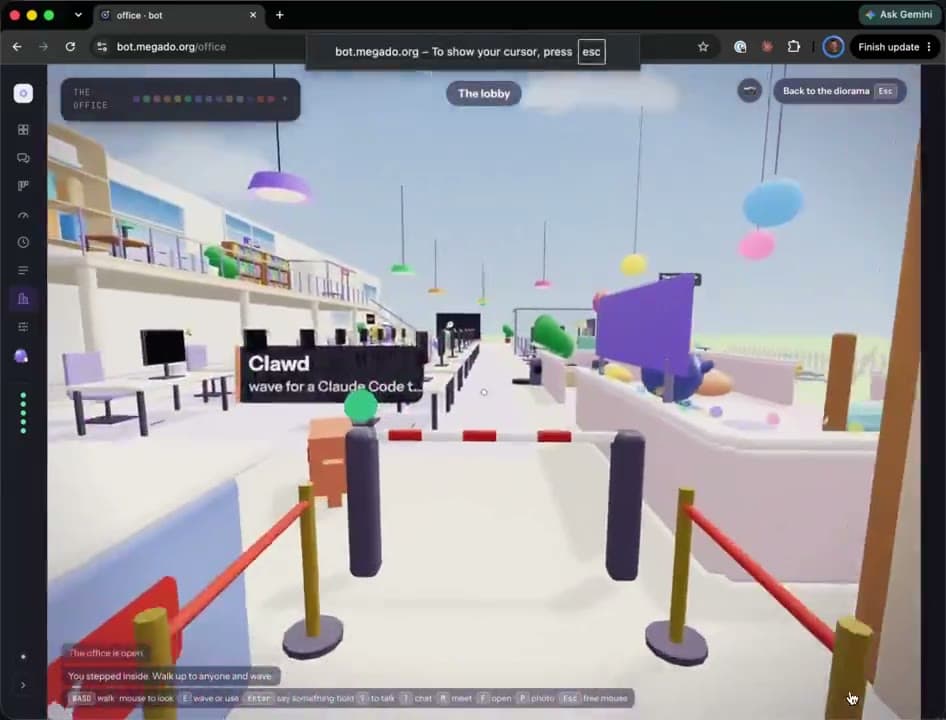
After further investigation of his X account, however, my agent found something more important:
great.. now I have a /goal prompt to remake this. I need to stay off X there are too many cool ideas

I've gotten a ton of questions about the Claude Code Office Harness. You can use it as a main tool to go from prompt to prop.
- It's Svelte, Claude Agent SDK, & Three.js
- AI SDLC loop is real - agents have a ton of autonomy but safeguards at every step
Working on OSS version!
- 2
- 0
- 48
- 8.6K
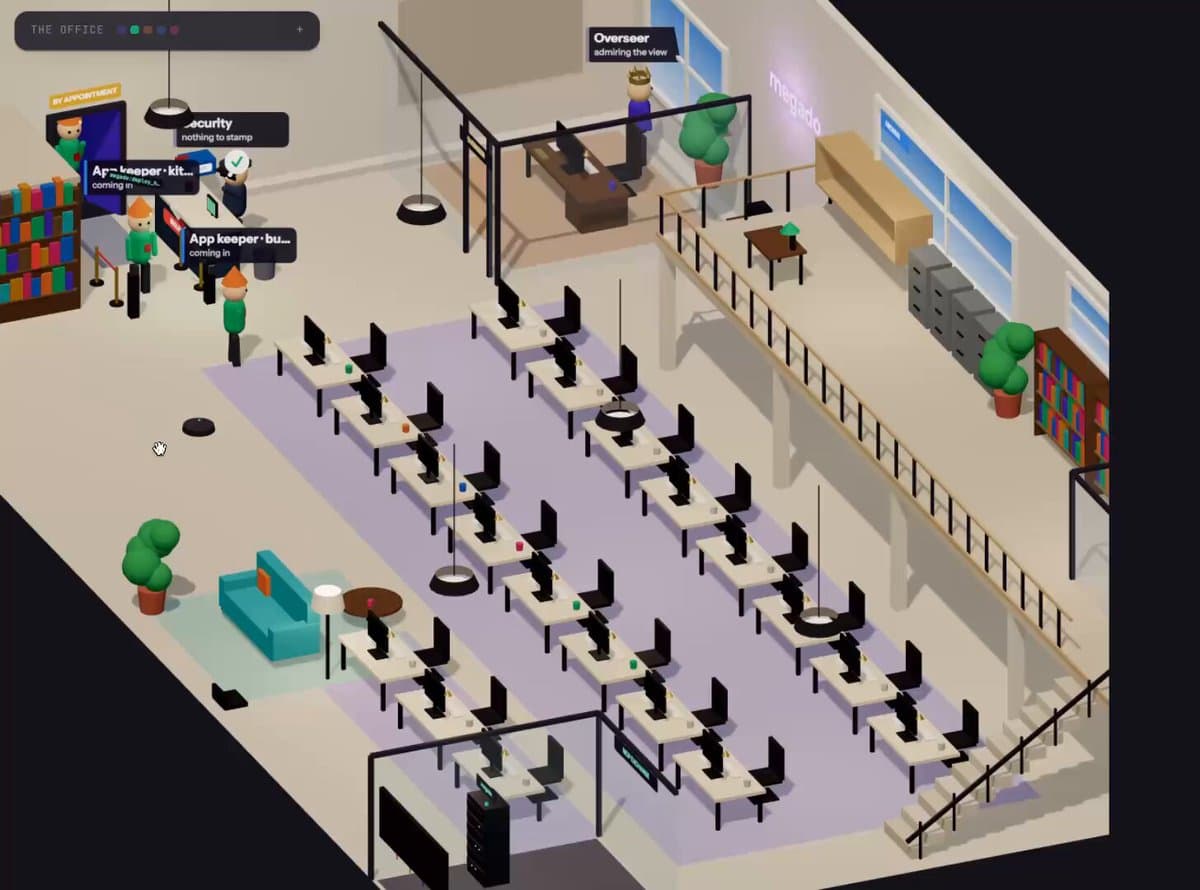
So his office was a remake of someone else's: the one Ado (from Anthropic) had been building for his own agents. And when I scrolled back through Ado's posts, I found this, from four days before my first prompt:
Bots at play.
Replayed from real claude code sessions.
- 6
- 1
- 27
- 4.1K
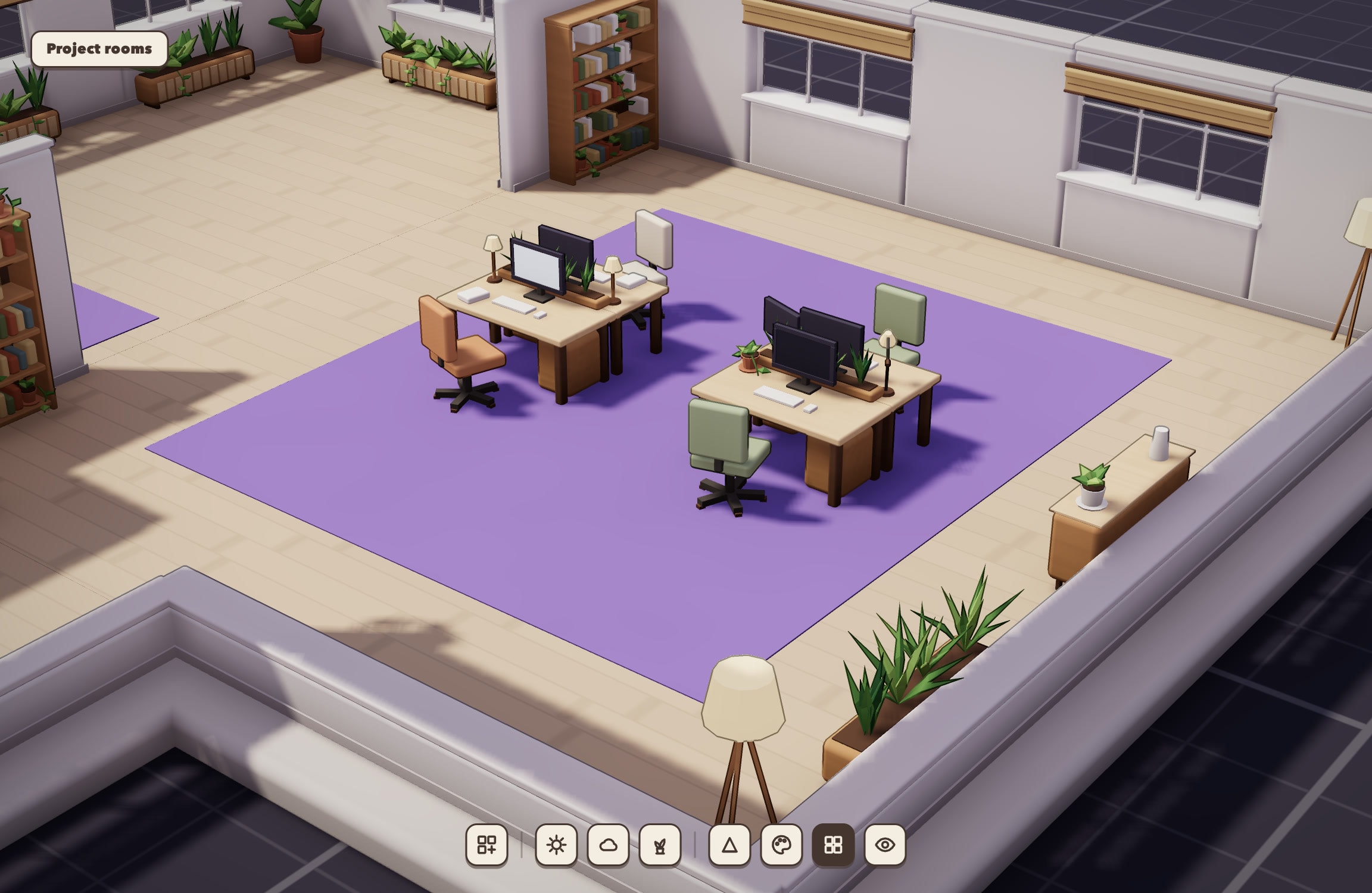
It has working desks with a big colored carpet, potted plants, and also bookshelves like in my version.
So nothing could have come from me, and nothing was hacked or leaked from my codebase.
One thing I can't rule out: maybe I scrolled past it on X and my subconscious remembered it (actually, this is called cryptomnesia). I have no record of that either way.
Why it feels like theft
So nothing was stolen, but it still felt exactly like someone had stolen ideas from my mind. I think that feeling is about to become very common, and not because ideas have become less original. They've become cheap to build.
Until recently, building something took the idea, a lot of skill to make it real, and the dedication to see it through. Plenty of people had the idea of an office for their agents, but few could also model the furniture, write the shaders and wire every desk to a terminal. The skill set the bar high. And because so few projects made it over, the ones that did looked unique.
AI lowers that bar significantly. The skill it takes to speak an idea into existence and share it online has dropped to almost zero. What's left is mostly the idea and the will to keep going until it works. Far more people have those, so the same idea now gets built many times, by people who might have never seen each other's work.
From the inside, this looks exactly like being copied. You have an idea, you build it, and a few days later someone else posts the same thing. Nothing tells you that ten other people had the same idea that week.
It will happen far more often
None of this is new in principle. Newton and Leibniz developed calculus independently of each other, and who came first turned into one of the bitterest disputes in the history of science.
Mathematicians have often arrived at the same ideas without knowing about each other, often enough that it has a name: multiple discovery. It's just as common in the old web-era startup world (e.g., everyone building a location-based social network).
What's new is the scale. It used to be two mathematicians working on the same problem, a decade apart. Now it's everyone with the same models, the same feeds and a free weekend.
My hypothesis is that this will now happen far more often, in code, in art and in research.
The Navier–Stokes dispute earlier this month shows how hard it is to tell a leak from an independent discovery: the mathematicians suspected their Codex sessions had leaked, OpenAI says it got there on its own, and from the outside, nobody can tell which it was.
I think we could even enter a post-provenance era, where "that was my idea" stops being something that makes sense to say.
The spiral
Which leaves me with Ralv3. One option would be to post it right away, with the dates. That's where it gets worse, and it's the part that worries me most.
For most of us, the only proof that something is ours is a public post, because it carries a timestamp nobody can simply change. So to keep your provenance, you have to post early. But posting early is exactly what gets your work copied. Everyone who feels copied learns to post sooner, so everything gets posted sooner, and everything gets copied sooner.
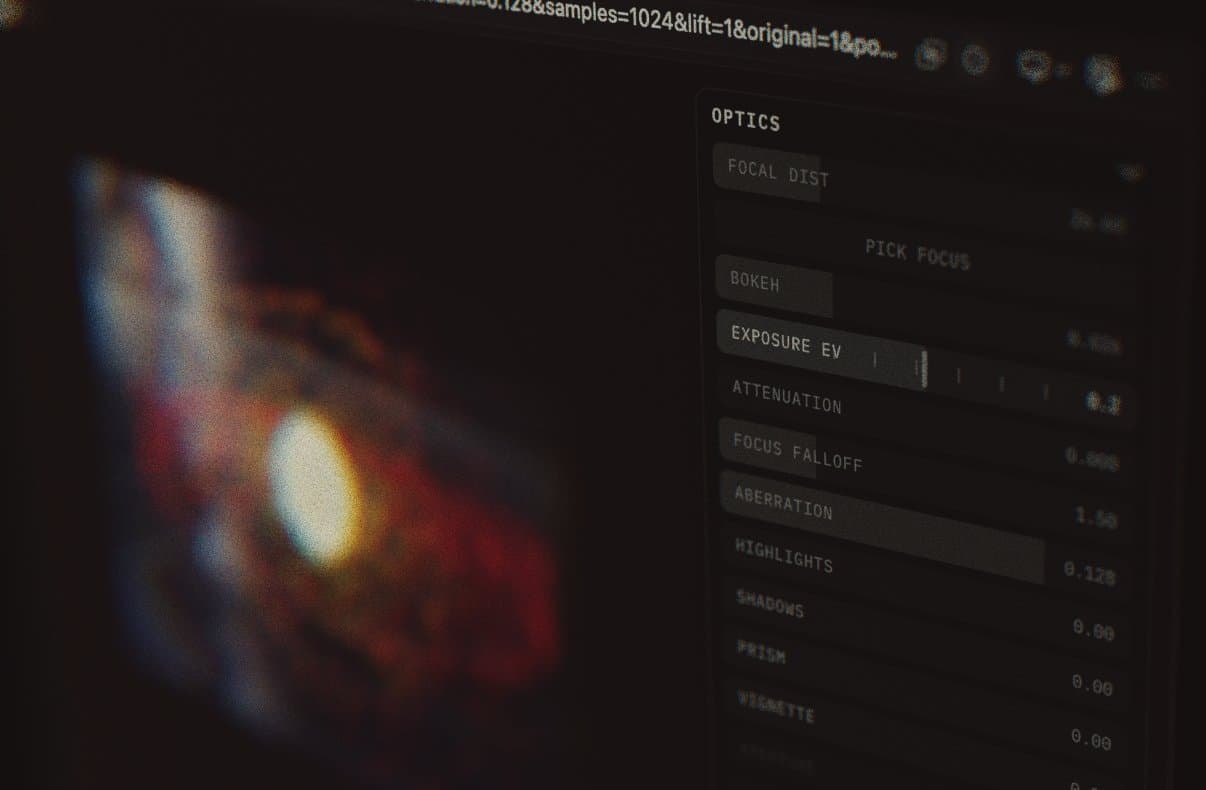
Besides the whole StarCraft for agents wave, I've also watched another public post do that to one of my projects. Last year, I released Tactile Image Viewer at t-iv.com, a small tool that renders images the way a real camera lens would. This July, it was rediscovered, and almost immediately, people started building their own versions of it.
I heard you like progressive blurs,
so I made a tool to get them physically accurate:
introducing Tactile Image Viewer

- 22
- 20
- 468
- 54.4K

thought @dom_scholz's t-iv was amazing but had some trouble with the camera controls. decided to replicate it with some tweaks and additional functionality
- 3
- 0
- 3
- 682
And since then, new tilt-shift and lens-blur websites like it keep appearing. I don't know which of them started from t-iv.com, and some probably didn't. But any of them could have, and from the outside, nobody can tell the difference.
The alternative to posting early is a stealth or late-mover play: build in private and show it when it's ready. Then whoever posted first owns the story, and you're the copycat, even if your work is older. If I post Ralv3 now, people will say I copied WebDevCody's agent-office.
Either way, provenance stops being a question of fact. It becomes a question of how well you can prove that something was your idea, and how many people you convince.
Provenance is a problem for all of us
If that's right, provenance isn't something each of us can solve by posting faster. It's a problem we have to address as a society, and right now technology only solves it in part:
- Social media gives you a public timestamp, but only for what you show, and showing it is what gets it copied.
- GitHub records how a project came to be, but only partly, because that history can be changed. And to use it as proof, you have to open-source your work, which in a way locks you into a business model.
- Blockchains could record that a piece of work existed at a certain moment. In theory, that solves the problem. In practice, it is way too complex to do.
- Patents are way too expensive, and they don't apply to the things we're talking about here.
So I really wonder how we'll end up solving that problem, how the whole build-in-public and OSS space will develop, and how software will make money in the future, when it can be copied by simply pointing an agent at a website or a binary.
In the end, it was the third explanation. We're less individual than we think: the same models and the same feeds lead us to the same ideas. Until recently, so few of them got built that nobody noticed.